Let’s begin with a simple but important question: what exactly is SEO, and why does it matter so much in today’s digital world?
SEO, or Search Engine Optimization, is the process of improving a website so it can attract traffic from unpaid, organic search results on search engines. These results are often referred to as free, natural, or editorial listings. The main objective of SEO is to increase a website’s visibility on search engine results pages, commonly known as SERPs. The higher a website appears in these results, the more likely users are to notice it, visit it, and engage with the business.
In the past, SEO was mainly about search engines like Google or Bing. Today, SEO goes beyond traditional search. Platforms such as YouTube, TikTok, and other social networks are increasingly used as search engines, especially by younger audiences. This means modern SEO also considers how content performs across multiple digital platforms.
SEO is not a shortcut or a one-time activity. It is a long-term strategy focused on delivering value to users while helping search engines understand and trust your website.
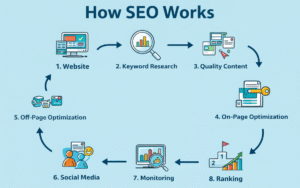 How SEO Works: Key Steps Explained
To truly understand how SEO works, we can break it down into several core activities:
1. Keyword Research and Search Intent
SEO begins with understanding what users are searching for. Keyword research involves identifying search terms and phrases that your target audience uses. But beyond exact keywords, modern SEO focuses on search intent — why people are searching and what information they expect to find.
For example, someone searching “SEO services” is likely looking for professional help, while someone searching “what is SEO” wants information and learning material. Aligning your content with search intent increases relevance, engagement, and rankings.
2. On-Page SEO: Content and HTML Optimization
On-page SEO refers to optimizing elements on your website so search engines can easily interpret your content. This includes:
- Well-structured headings and descriptive titles
- SEO-friendly meta descriptions
- Relevant keywords naturally incorporated into valuable content
- Organized internal links and clear navigation
High-quality content that directly answers user queries and solves problems not only ranks better but also improves user engagement — a key signal search engines consider.
3. Technical SEO
Technical SEO ensures that your website meets the technical requirements of search engines. This includes aspects like:
- Fast loading speed
- Mobile-friendly design
- Secure connections (HTTPS)
- Crawlable site architecture
- Structured data markup
When technical issues are resolved, search engines can easily crawl and index your content, which is essential for visibility and ranking.
4. Off-Page SEO and Authority Building
Off-page SEO focuses on building your site’s reputation and authority on the web. The strongest signal here is backlinks — links from other reputable websites pointing to your content. Quality backlinks act like endorsements, signaling to search engines that your site is trustworthy and valuable.
Other off-page factors include social signals and online mentions, all of which contribute to your site’s credibility and ranking potential.
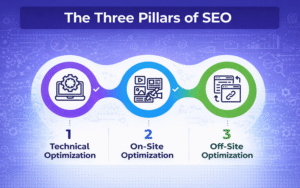
What Are the Three Core Pillars of SEO?
Although SEO evolves constantly, its foundation remains the same. At its core, SEO is built on three main pillars that work together to improve rankings, traffic, and user experience.
Technical SEO: Optimizing the Foundation of Your Website
Technical SEO focuses on improving the technical aspects of a website so search engines can easily crawl, index, and understand its content. These optimizations usually happen behind the scenes but are essential for strong SEO performance.
Examples of technical SEO include improving website speed, ensuring mobile friendliness, using secure HTTPS connections, fixing broken links, and submitting an XML sitemap to search engines. Without a solid technical foundation, even the best content may struggle to rank.
On-Page SEO: Optimizing Content and Page Elements
On-page SEO involves optimizing the visible elements of a webpage to make it relevant and valuable for users and search engines. This includes creating high-quality content, using relevant keywords naturally, optimizing headings, titles, meta descriptions, images, and internal links.
On-page optimization also focuses heavily on user experience. Content should be easy to read, helpful, and well-structured. Content management systems like WordPress, Shopify, Magento, or Wix make it easier to implement on-page SEO best practices.
Off-Page SEO: Building Authority and Trust
Off-page SEO refers to actions taken outside your website that influence how search engines perceive your brand’s credibility and authority. The most important off-page factor is backlinks—links from other reputable websites pointing to your site.
High-quality backlinks act as trust signals. They tell search engines that your content is valuable and worth ranking. Off-page SEO also includes brand mentions, online reviews, and digital PR efforts.
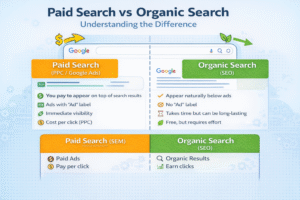
Paid Search vs Organic Search: Understanding the Difference
To understand SEO properly, it’s important to compare organic search with paid search.
Paid search allows businesses to display ads at the top of search results by paying for each click. This can generate traffic quickly, but results stop once the budget runs out.
Organic search, powered by SEO, focuses on earning visibility naturally. It takes more time, often several months, but delivers long-term benefits and sustainable traffic.
Paid search is easier to measure in the short term, while organic search often delivers better returns over time. Research consistently shows that organic search drives the majority of website traffic, making SEO a crucial investment.
Despite their differences, both paid and organic search rely on keyword research, high-quality landing pages, and user intent. When used together, they can strengthen a complete digital marketing strategy.
How Do Search Engines Actually Work?
Search engines exist to help users find accurate and relevant answers to their questions. To do this, they rely on complex algorithms and automated systems.
There are three main stages in how search engines work: crawling, indexing, and ranking.
Crawling: Discovering Content
Search engines use automated programs known as crawlers, bots, or spiders to explore the internet. These crawlers follow links from page to page, discovering new content and checking existing pages for updates.
If a webpage is not linked properly or has technical issues, crawlers may not find it easily, which can impact SEO performance.
Indexing: Storing and Organizing Information
Once content is crawled, search engines decide whether it should be stored in their index. The index is a massive database where information is organized and stored for retrieval.
Pages with duplicate, low-quality, or spam-like content may not be indexed. Pages that provide unique, valuable, and relevant information are more likely to be included.
Ranking: Displaying the Best Results
Ranking is the process of ordering indexed pages based on relevance and quality. Search engines use hundreds of ranking signals, such as content relevance, page speed, mobile usability, backlinks, and overall website reputation.
Only after crawling and indexing can a page be ranked.
How Google Ranks Search Results
Google uses multiple algorithms to determine how pages appear in search results. Some algorithms focus on content quality, others on user intent, and some on trust and authority.
Machine-learning systems help Google understand unfamiliar queries, match them with relevant topics, and deliver results that satisfy user expectations. Instead of rewarding keyword repetition, modern algorithms prioritize helpful content and positive user experience.
Google also emphasizes experience, expertise, authority, and trustworthiness when evaluating content quality, especially for sensitive topics.
What Is an SEO Strategy?
An SEO strategy is a structured plan designed to improve a website’s visibility in organic search results. Its main goal is to attract the right audience and increase meaningful traffic.
A strong SEO strategy focuses on keyword research, content planning, technical optimization, and ongoing performance analysis. It helps businesses invest time and resources into content that aligns with user intent and business goals rather than guessing what might work.
For businesses serving specific locations, local SEO is an important part of the strategy, helping them appear in location-based searches.
Measuring SEO Performance and Setting Objectives
SEO works best when goals are clearly defined and tracked. Objectives should align with overall business goals and help guide decision-making.
Common SEO metrics include keyword rankings, organic traffic, click-through rate, time spent on page, engagement rate, leads, and revenue. These metrics help businesses understand what is working and where improvements are needed.
SEO objectives should be realistic and data-driven. New websites may focus on visibility and traffic growth, while established websites may aim to increase conversions or market share.
SEO Is a Long-Term Investment
SEO is not a one-time task. It requires continuous optimization, monitoring, and adjustment. Search behavior, competition, and algorithms change regularly, so SEO strategies must evolve as well.
With a strong foundation and consistent effort, SEO improves user experience, builds brand authority, and delivers long-term growth. Businesses that invest in SEO benefit from sustained visibility, better engagement, and higher conversions over time.
Final Thoughts
Search Engine Optimization is one of the most powerful tools in digital marketing. It helps businesses connect with users who are actively searching for information, products, or services. By focusing on technical optimization, high-quality content, and authority building, SEO creates lasting value and measurable results.
When done correctly, SEO is not just about rankings—it’s about delivering the best possible experience to users while supporting business growth.