As digital marketing becomes more competitive, businesses are constantly looking for faster and smarter ways to reach customers. While SEO remains a powerful long-term strategy, it often takes time to deliver results. This is where PPC Ads (Pay-Per-Click advertising) step in as a strong growth accelerator.
Think of PPC like a fast lane in digital marketing. Instead of waiting months for visibility, PPC allows your business to appear in front of the right audience almost instantly. When planned and managed properly, PPC ads can drive traffic, generate leads, increase sales, and boost brand awareness in a short time.
What Are PPC Ads (Pay-Per-Click)?
PPC, or Pay-Per-Click, is an online advertising model where you pay only when someone clicks on your ad. Instead of paying for visibility alone, you pay for real engagement—people who are interested enough to click and visit your website.
PPC ads can appear on search engines like Google and Bing, as well as on social media platforms such as Facebook, Instagram, LinkedIn, and others. The cost of each click depends on factors like keywords, competition, audience targeting, and ad quality.
In simple words, PPC is like buying targeted traffic or ready-to-convert leads for your business.
How PPC Advertising Works (In Simple Terms)
PPC works through a bidding or auction system. You choose keywords or audience criteria related to your business and set a budget. When users search for those keywords or match your targeting, your ad becomes eligible to appear.
However, showing ads is not just about money. Platforms also look at ad relevance, quality, and user experience. This means even with a controlled budget, well-optimized PPC campaigns can perform strongly.
Once your ad is live, you are charged only when someone clicks on it.
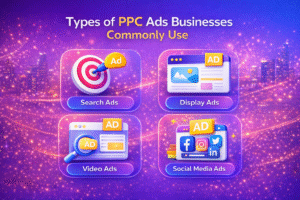
Types of PPC Ads Businesses Commonly Use
Paid Search Ads
Search ads appear at the top of search engine results when users are actively looking for products or services. These ads are highly effective because they target people with strong intent. If someone is searching, they are already interested.
Paid Social Media Ads
Social media PPC ads help you reach users even if they are not actively searching. Platforms like Facebook and Instagram allow advanced targeting based on interests, behavior, demographics, and location. This is great for brand awareness, engagement, and demand creation.
Shopping Ads
Shopping ads display product images, prices, reviews, and brand names directly in search results. These ads work especially well for e-commerce businesses because users can see product details before clicking.
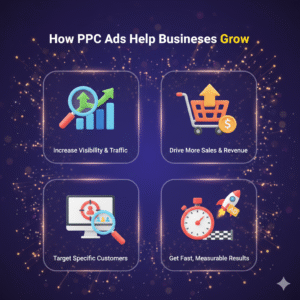
How PPC Ads Help Your Business Grow
Fast Results When You Need Them
One of the biggest advantages of PPC ads is speed. As soon as your campaign goes live, your business starts gaining visibility and traffic. This makes PPC ideal for new businesses, product launches, seasonal offers, or time-sensitive campaigns.
Reach the Right Target Audience
PPC ads are highly targeted. You can define who sees your ads based on location, interests, search intent, devices, time, and more. This ensures your budget is spent on people who are most likely to convert.
Better Control Over Marketing Budget
With PPC, you decide how much to spend. You can increase budgets on high-performing campaigns and pause ads that are not delivering results. This flexibility makes PPC suitable for both small businesses and large brands.
Measurable and Data-Driven Growth
PPC provides clear data—clicks, conversions, cost per lead, and return on ad spend. This transparency helps businesses understand what’s working and improve campaigns continuously.
Strong Support for SEO and Long-Term Marketing
PPC does not replace SEO—it supports it. PPC campaigns help test keywords, offers, and landing pages quickly. The data collected can then be used to improve long-term SEO and content strategies.
PPC vs SEO – Which One Is Better?
SEO is a long-term strategy focused on organic growth, while PPC delivers instant visibility and faster results. PPC is like a rocket—it launches quickly and gives immediate reach. SEO is like building a strong road—it takes time but supports long-term travel.
The best-performing businesses don’t choose one over the other. They use PPC for quick wins and SEO for sustainable growth.
Are PPC Ads Right for Every Business?
Yes, PPC ads can work for almost any business, but the strategy must be customized. PPC is especially effective for:
- E-commerce businesses
- Service-based companies
- Local businesses
- Startups and new brands
- Highly competitive industries
The key is proper planning, continuous optimization, and expert management.
Challenges of PPC (And Why Expertise Matters)
While PPC offers many benefits, it also requires time, skills, and ongoing optimization. Platforms change frequently, competition increases, and poorly managed campaigns can waste budget.
This is why many businesses choose to work with experienced PPC specialists or digital marketing teams. Professional management ensures better targeting, improved ROI, and smarter use of ad spend.
Final Takeaway: PPC as a Growth Engine
PPC advertising is one of the most effective ways to bring traffic, leads, and customers to your business quickly. It gives you control, speed, and measurable results—something every growing business needs.
However, PPC works best when combined with a clear strategy, strong landing pages, and long-term SEO efforts. When done right, PPC doesn’t just bring clicks—it brings growth.
If you’re thinking about using PPC ads for your business, the real question is not “Should I try PPC?”
It’s “Am I using PPC the right way?”
If you want to explore how PPC can work specifically for your business goals, this is the right time to discuss it. The right strategy can save time, money, and help your business grow faster